Armour is located in south central South Dakota along U.S. Highway 281. It is 90 miles west of Sioux Falls and 45 miles southwest of Mitchell.
History buffs will find a wealth of resources in Armour. Whether you’re researching your family tree or just interested in South Dakota history, Armour has plenty to see and do.
Pleasant Ridge Cemetery

Located on the northeast edge of town, Pleasant Ridge Cemetery offers a peaceful final resting place for those who lived in the Armour area. Pleasant Ridge is a private cemetery managed by a local board of directors who oversee its operation.
History
This information excerpted from the 1961 Douglas County history book.
Pleasant Ridge was incorporated on July 6, 1889. The articles were filed in Pierre, the state capitol, and provided for perpetual existence with authorized capital stock of $1,000. Those signing the articles of incorporation were Charles E. Huston, George W. Lumley, Philander B. Burton, David M. Henderson and John S. Bean. In May 1890, a 10-acre tract was platted by C.E. Huston, surveyor, who was assisted by D.M. Henderson and John S. Bean. The lot corners were marked by red cedar stakes driven level with the ground. This tract was named Pleasant Ridge Cemetery by John S. Bean, who also served as the first president of the corporation.
An additional three acres (lying adjacent to the original 10 acres) was platted in July 1908 along the west and south. In 1960, another tract was platted directly west of the previous 13 acres. This addition was paid for by Charles P. Crutchett. The James Berry home and acreage surrounding Pleasant Ridge was purchased in September 1926 from Mrs. James Berry for $4,000 and was used as a home for the cemetery sexton.
Ladies Cemetery Association
The Pleasant Ridge corporation carried on for some time with donated labor and money from donations, which was used to buy mowers, drill a tubular well and fence the grounds. The need for an annual income was evident and the Ladies Cemetery Association was formed to care for, beautify and otherwise improve the cemetery. Articles of incorporation for the Ladies Cemetery Association were issued May 2, 1918. The directors were Lulu B. Wanzer, Frances A. Carmody, Lillian A. Scholes, Mary Carlon, Abbie J. Morgan, Nellie R. Henderson and Minnie Rabern. Lulu Wanzer was its first president.
Membership in this group was fixed at $1 and soon grew to include women from surrounding communities The main source of income was from an annual dinner and supper served on Memorial Day in the larges empty building available in Armour. Sometimes, the dinners were held on the first floor of the Sietebak building, which later became Wudel Chevrolet. The event was also held in the Johnson House, a three-story hotel, which was located across the street from the Sietebak building, or in the building located on the corner south of the Fullerton Lumber Co., which was lost to fire many years ago.
Money from the dinners was used to make many improvements such as building a tool house, a wrought iron fence along the south with a large south gate, an entrance gate to the north and cement sidewalk along the entire south side of the cemetery property. In the earlier days, lot owners used to take care of their own lots and it was a common sight to see four or five ladies with hoes, rakes and spades wearing their garden gloves and bonnets to work on their lots.
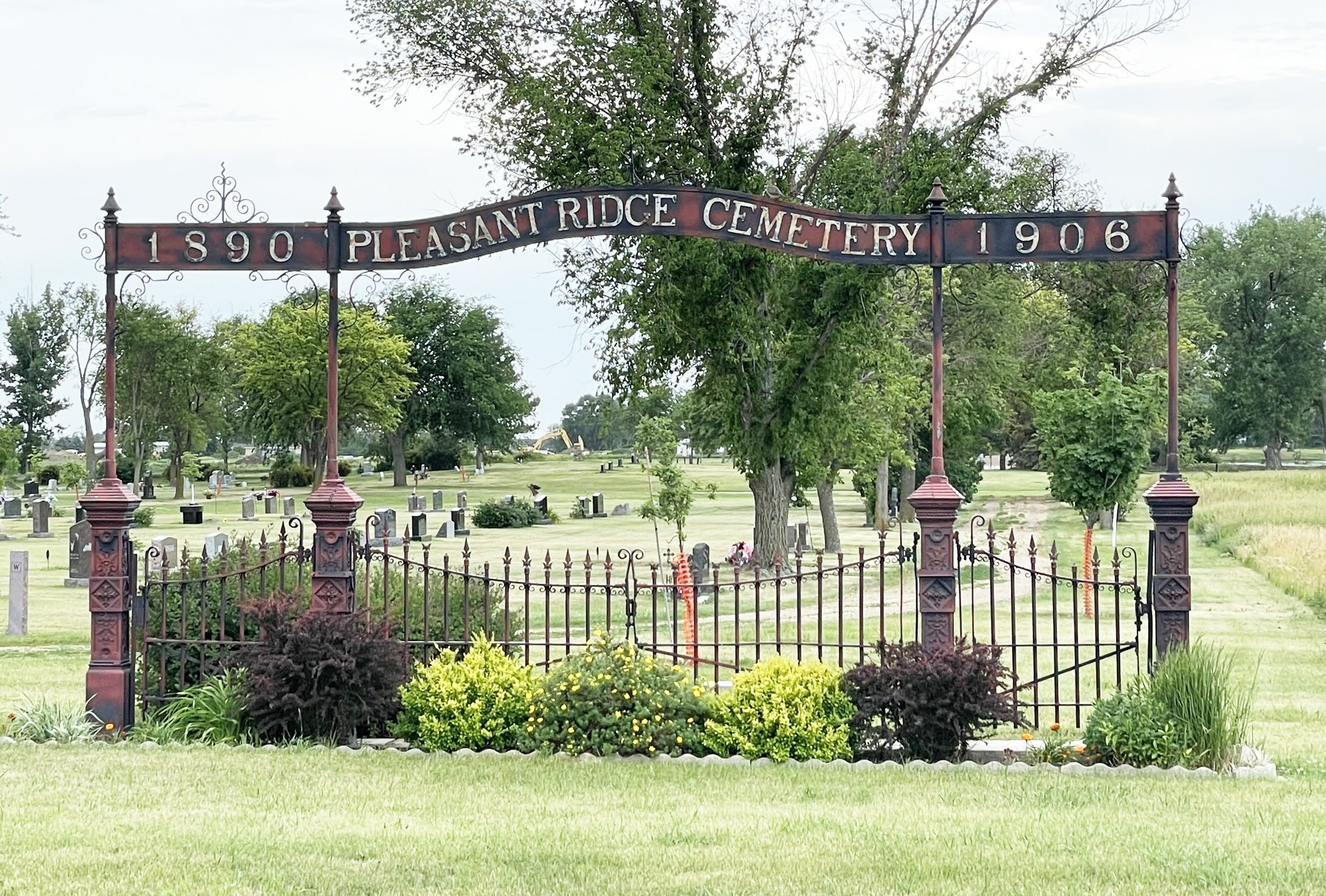
The Cemetery Today
The Pleasant Ridge landscape is populated by many species of trees such as horse chestnut, catalpa, evergreens, elm, maple and various flowering shrubs. A part-time caretaker is charged with mowing and tree trimming. Each year, a fund drive is held to generate donations for the permanent care of the property.
Board of Directors
Carter Wiese, president
Barb Mills, secretary
Tammie Werkmeister, treasurer
Don Putnam, member
Greg Blume, treasurer of cemetery foundation
Grave spaces are $400. To purchase a grave space, contact Carter Wiese at (605) 724-2129 or Don Putnam at (605) 724-2245.

Cemetery Directory
A map and directory of grave sites is located at the north entrance to the cemetery. The information is also available online.
Other Genealogy Resources
Douglas County Genealogy — Part of the SDGenWeb Project
The SDGenWeb Archives
The South Dakota Tombstone Transcription Project
Douglas County Museum
and Country School
Hours:
Mondays, Wednesdays and Fridays
Memorial Day through Labor Day
1 to 4 p.m.
Or by appointment, year around.
Call 724-2129 or 724-2795 or 724-2423.
No admission charge.
Located along Highway 281 on the Douglas County Courthouse Grounds
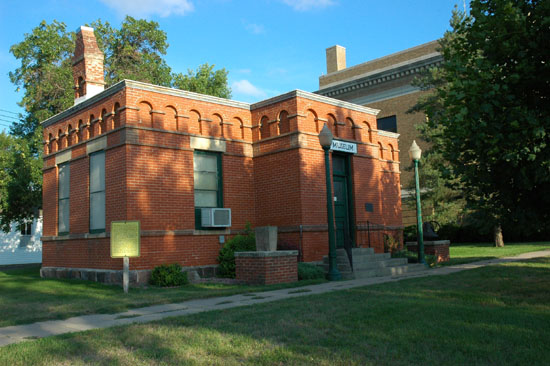

The red brick building, which houses the Douglas County Museum, originally served as the offices of the County Auditor and Register of Deeds. It was built in 1902 because state law required county auditors and registrars to be located in fireproof buildings — at the time, the main courthouse was a frame structure. The cost of construction was $3,625. After the present courthouse was built in 1927, the smaller structure was no longer needed and it was then used as an office for a local attorney and, later, as a storage facility. Since 1960, the Douglas County Historical Society has housed its growing collection of artifacts in the structure. It was placed on the National Register of Historic Places in 1976.
Charles Crutchett, and early settler and druggist in Armour, was instrumental in setting up the museum. His early work has been continued and expanded by the Douglas County Historical Society. The museum was dedicated in Mr. Crutchett’s name in 1974. The museum collections include clothing, household items, farm tools, office equipment, American Indian artifacts, military items, photographs and other memorabilia unique to the Douglas County area. Most items in the collection have a connection to area residents. Of interest outside the building are light poles, which were originally on Armour’s Main Street, and the bell and keystone, which were from the 1908 Armour school building.
The Hockey-Helland School was originally located in western Douglas County. It was built in 1884 and served as a school almost continually until 1963. It was moved to its present location northwest of the museum in 1981. It still contains some of its original furnishings along with other school items. Each spring, all second graders in Douglas County are invited to attend “School Days” in the Country School. With the help and cooperation of the schools, second grade teachers in the county and former country school teachers, this project allows children to re-live the “good old days.”
The Douglas County Museum and Country School are under the care and management of the Douglas County Historical Society. The maintenance and operation of the facilities are funded by Douglas County and private donations.
The Railroad House
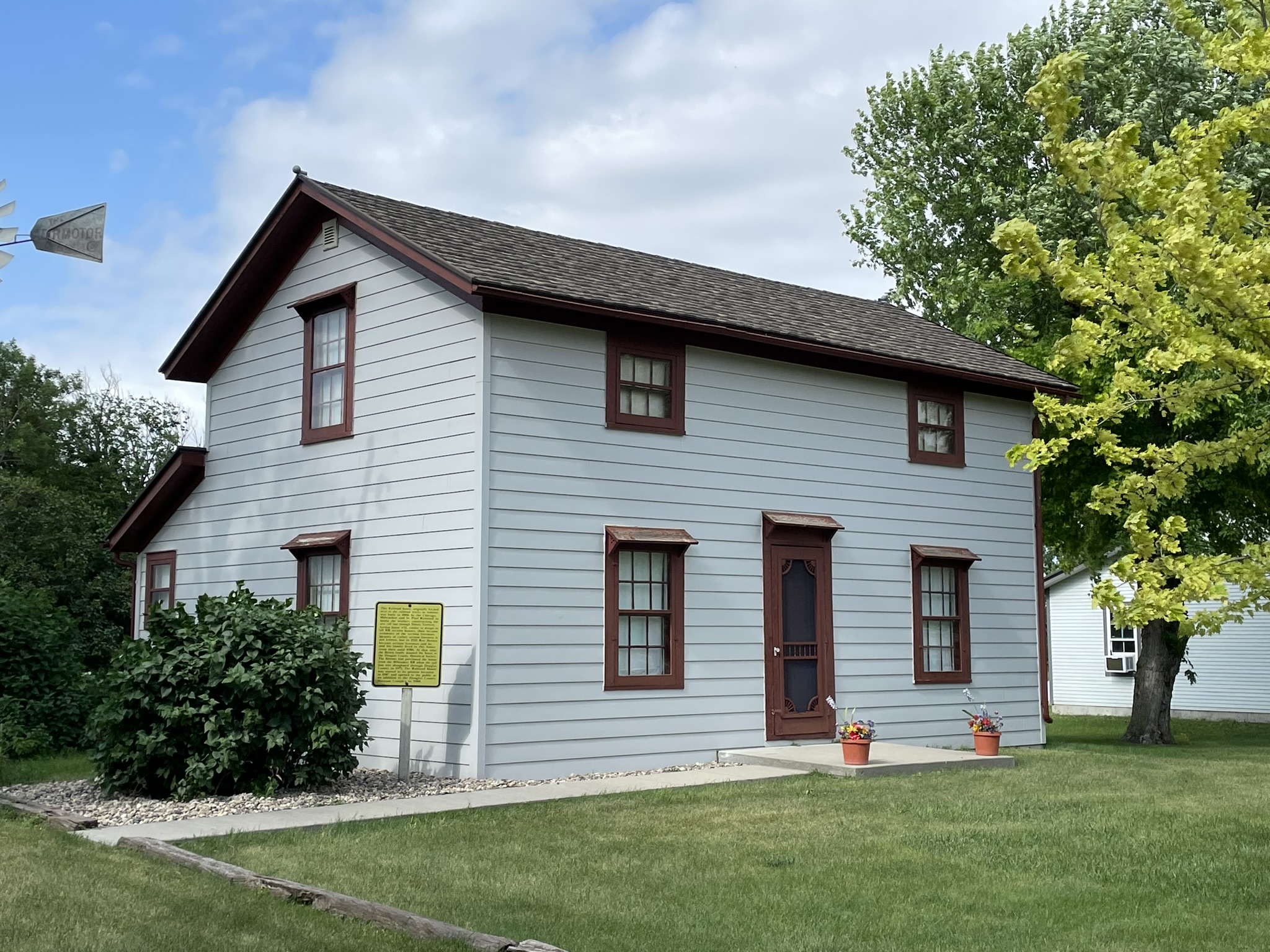
The Railroad House was added to the Douglas County Museum Complex in 1988. This house, built in 1886 by the Chicago, Milwaukee & St. Paul Railroad, is similar to those provided by the rail companies for Section Foremen and their families. The Milwaukee Section House #33 was originally located by the railroad tracks in what was to become Armour. It first housed workers constructing the railroad. It is not known who the first Section Foreman was; however, in 1921 Roy Brown was hired to fill that position and he and his family moved into this house where they continued to live throughout Roy’s life and until his wife, Amelia, moved to the Pleasant View Nursing Home in Corsica in 1986. When the Milwaukee Road abandoned the rail through Armour in 1972, the Browns bought the house and were given life estate to the lot on which it stood. In 1986, Mrs. Brown and her family donated the house to the Douglas County Historical Society to be moved and used as a museum addition.
With funding from Douglas County, the historical society, private donations and hours and hours of volunteer labor, restoration was completed. Furnishings include items that were already owned by the museum, as well as items donated and loaned to complete decoration in the period of the early 1900s. The house is open during regular museum hours, or by appointment.
Additional Armour History
In anticipation of Armour’s Sesquicentennial Celebration slated for July 1-4, 2011, the Armour Chronicle has been publishing a series of historical reflections about Armour. They have been generous enough to share them for archival purposes on the website.
Railroad Brings Early Prosperity to Armour
The people of Armour anxiously awaited the first train in 1886. On October 8, the first real freight train bringing in 20 cars of lumber, coal and merchandise finally arrived. Nine days later the telegraph line connected Armour with the “outer world” and on October 26, the first passenger service began.
Carpenters built a section house, depot, roundhouse, turntable and stockyards. The stockyards were on the southeast edge of town. The roundhouse and turntable, which was used to reverse the direction of the engine, were located in the vicinity of what is now the corner of Depot and Mathews Street. The two-story Depot was erected approximately at Main and Mill Street. The second story was the home of the Depot Agent(s).
Section House #33 was located close to the track at the corner of Mill and Braddock. It was first used to house the RR construction workers and later house Section Foreman and their families. It is the only tangible remains of the original Chicago, Milwaukee and St. Paul Railroad remaining in Armour. In 1986, it was moved to county property and now serves as a part of the Douglas County Museum Complex.
Since Armour was the end of the line, for a time it was said to be the best-paying railroad in the state. Three years after the first train arrived, there were a total of eight trains daily. A round-trip ticket from Armour to Mitchell to the Fair cost $1.10. In February of 1889 a round-trip ticket could be bought for $32.25 to attend the inauguration of President-Elect Harrison in Washington, D.C.
The Armour Roller Mill was erected in 1888. It was located on the southeast corner of Braddock and Depot and provided a major industry for the county. It had a capacity of more than 100 barrels of flour a day, much of which was shipped out by rail. In the last year of the century (1899), according to the Armour Chronicle, shipments from Armour included 366 carloads of hogs, 139 carloads of fat cattle and 45 carloads of butter and eggs plus an average of two carloads wheat a day for the entire year. It is interesting to note that most of the butter and eggs went directly to New York.
On Monday, Sept. 3, 1888, the town was declared incorporated. Statehood followed in November of 1889. Armour was definitely prospering, but failed to become a “Second Denver” as predicted by the Douglas County Chronicle.

Armour Fires and Firemen
The first meeting of the Armour Volunteer Fire Company was held on Jan. 6, 1892. This was after the first water mains were laid in the summer of 1891. Prior to this, a hose company had been formed in May of 1891. Some equipment was purchased, but was of little use before the mains were installed and, as a result, the company functioned poorly.
After the mains were laid, the fire alarm sounded in Nov. of 1891. It was the blue barn owned by C. O. Knapp. It was fully 30 minutes from the first cry of fire before the hose was laid and the water turned on. In the first place, everyone ran to the fire and left the cart in the hose house. When the cart finally arrived, the hose had been reeled on the wrong way. The end, which should have been at the hydrant, was at the fire over a block away. Finally, no wrench could be found to turn on the water at the hydrant. Needless to say, the barn burned to the ground. The Chronicle stated the only way to solve these difficulties was “to organize a hose company and have some head to the matter.”
The first Fireman’s Ball was held Jan. 4, 1893. That Ball generated $69 in receipts with $18.05 in expenses, leaving a grand total of $50.95 profit. That tradition continues today.
Through the years the Fire Company has been put to the test many times. The first real fire in the city occurred in January 1891. It swept though two blocks of the west side of Main Street from First St. to Third St. The only way the fire was stopped then was by tearing down the buildings to create firebreaks.
In 1916, fire destroyed every building on the east side of Main Street from First St. to Second Street except the one at the north end where the Parkhurst Law Offices is now located.
The fire of 1926 destroyed four buildings on the west side of Main Street. The fire probably started in a cafe. Crutchett’s Drug Store was destroyed for the third time having originally been on the west side of Main Street before 1891, moved to the east side and then back to the west side after the 1916 fire.
In 1931 three business places burned in Block 25. A gasoline stove exploding in a cafe caused the fire. In December of that same year, the building where the Senior Citizens is now located was completely gutted. The cause of the fire was never known.
Starting in February of 1932 there was a series of fires. The first one burned the Johnson Hotel, which stood where the Post Office is now. Three days after that, Hanskutt’s Store had a fire in the basement. Fortunately there was only water and smoke damage. A little later that same month the building across the street burned completely. The citizens of Armour were by now sure there was a firebug in their midst. It was never proven one way or the other.
The Armour Roller Mill, located across from where the Co-op is now, was totally destroyed by fire in the winter of 1934. Fires were at a low ebb from then until 1952 when the Congregational (UCC) Church was completely destroyed the Saturday before Palm Sunday. The origin of the fire is unknown, but it was thought to have been a faulty furnace. It is assumed that an explosion occurred as the flames spread so rapidly.
The last major fire was in March 1959. Many of the town’s people were in Lake Andes at the District Tournament in which the Packers were playing for the championship. It was announced at the game that the Armour Firemen were needed at home. Three buildings burned that night–the Chrysler Garage, Fullerton Lumber Company and the VFW Building. Only the Fullerton Lumber Company was rebuilt. And Armour did win the tournament.
We can be grateful we have not had a big fire in the last 50 years. The fire equipment has dramatically improved and is housed in a new efficient building constructed in 2001.
We can also be grateful to the men who give their time and effort to protect us 24/7. Remember this when they come around to sell you a ticket for the Fireman’s Ball. Please be generous.
Lets Get Organized!
From the very beginning the residents in Armour were organizing. One of the first official groups was the O.P. Morton Post, G.A.R. (Grand Army of the Republic). Its members were all veterans of the Civil War. It was an active organization for many years and took great pride in the exercises on Memorial Day. With the death of M. H. Surpless in 1934, Armour lost its last G.A.R. member.
The American Legion Post was organized in 1919 as McGrath Post. After WWII, the name was changed to McGrath-Ferguson in honor of the first who gave his life for his country in the second war. The first commander was Earl Henderson. (namesake of Henderson Street). Following WWII, the Douglas Post No. 6897, V.F.W. was organized. Its first commander was Don B. Clements. Both of these groups are still active today and both have Women’s Auxiliary groups.
Early in the 1900s many “Fraternal Benefit Societies” started in Armour. They were the Knights (& Ladies) of the Maccabees, Royal Neighbors of America, Ancient Order of United Workman, Degree of Honor Lodge and Woodmen of the World. One purpose of all these organizations was to provide some sort of life insurance plan for their members. But social and self-improvement activities were equally important. By the middle of the century most of these groups no longer officially held meetings. Their insurance plans continued for many years.
One of the first fraternal organizations in town was the Masons, being chartered in 1888. In the early days when Fort Randall was still activated, many would drive up from there to attend. The only Chinese member of Arcania Lodge came from the Fort. The Lodge continues to be active today. Other Fraternal Lodges were the Knights of Pythias and Ind. Order of Odd Fellows. The KPs ceased in the late 1920s and the Odd Fellows in the middle 1970s. The Order of Eastern Star was chartered in 1901. It is still active today. The Rebekah Lodge was chartered in 1904. It ceased shortly after the Odd Fellows. Chapter AO. PEO was organized in 1932 and continues today. Through the years, the PEO Sisterhood was very active in sponsoring Brownie and Girl Scouts. During the 1930-1950s they maintained a “Girl Scout House” located on the northeast edge of Lake Alcazar. The Boy Scouts were organized in Armour in 1911. This was probably the first Boy Scout Troop in the state. The Knights of Columbus were organized in 1988 and is active at present.
Along with all the fraternal organizations, there were also “study clubs” and “extension clubs.” These were all-female organizations. Part of their purpose was social, but also in a time before radio and TV, they were a great source of information. Most of them continued into the late 1990s, but due to our changing lifestyles no longer exist.
Under the heading of “civic organizations,” the Pleasant Ridge Cemetery Association is the oldest, incorporated in 1889. As time passed, the association realized that aid was needed in maintaining the cemetery and “The Ladies Cemetery Association” was formed. The two groups continued as two separate entities until the 1970s when it became one organization.
During the past 125 years there have been various business organizations. Because of lack of interest many discontinued. But in 1943, the Armour Commercial Club was started with the purpose of promoting events and businesses in town. It continues today as the Armour Community Club. The Douglas County Historical Society was organized in 1955. Through the efforts of Charles and Louisa Crutchett and the cooperation of the County Commissioners, the Society established the Douglas County Museum in the brick building north of the courthouse. The Hockey-Helland country school, originally on the west edge of Douglas County, was moved onto the courthouse grounds in 1981. In 1988 the Roy Brown Family donated the section foreman’s house to the Society. It was moved from its original location next to the railroad tracks to across the street from the brick building. All three buildings are open on a regular basis during the summer and at other times by appointment. In the 1970s the Jaycees and Jayceettes were active. When the Jaycees discontinued, the Jayceettes became the Women In Action. They remain active today supporting community projects, especially those concerning children. The Lions Club was chartered in 1982 and since that time has aided many projects in the community, but the most notable is the Lions Park. There are two Community Development groups one “for profit” and the other “non-profit.” And last, but not least, is the Armour Community Foundation. Contributions to this are held in perpetuity and the earnings are awarded each year to projects in the community.
We are organized! If you want to go to a meeting, take your pick. They would all love to see you! New members are always welcome.